

Find an installer
Compare quotes from verified solar installers near you
Enter your PIN code & get matched on the next page.
Installers manually verified by a human
❄️ Cooling a commercial building needs many approaches, not a Swiss army knife.
The main focus for cooling is implementing measures that would reduce cooling consumption in new/ existing building that is under the control of a building management company.
This while maintaining objective of simplicity and minimal intrusion. Beware of companies which want to sell you expensive cooling equipment on day 1
Any person or entity must ask itself if they have tried and tested these below solutions for cooling before going to expensive equipment.
What you need is a mix of non cooling technologies (which are are generally cheaper ) and cooling based technologies which will come at significant expense.
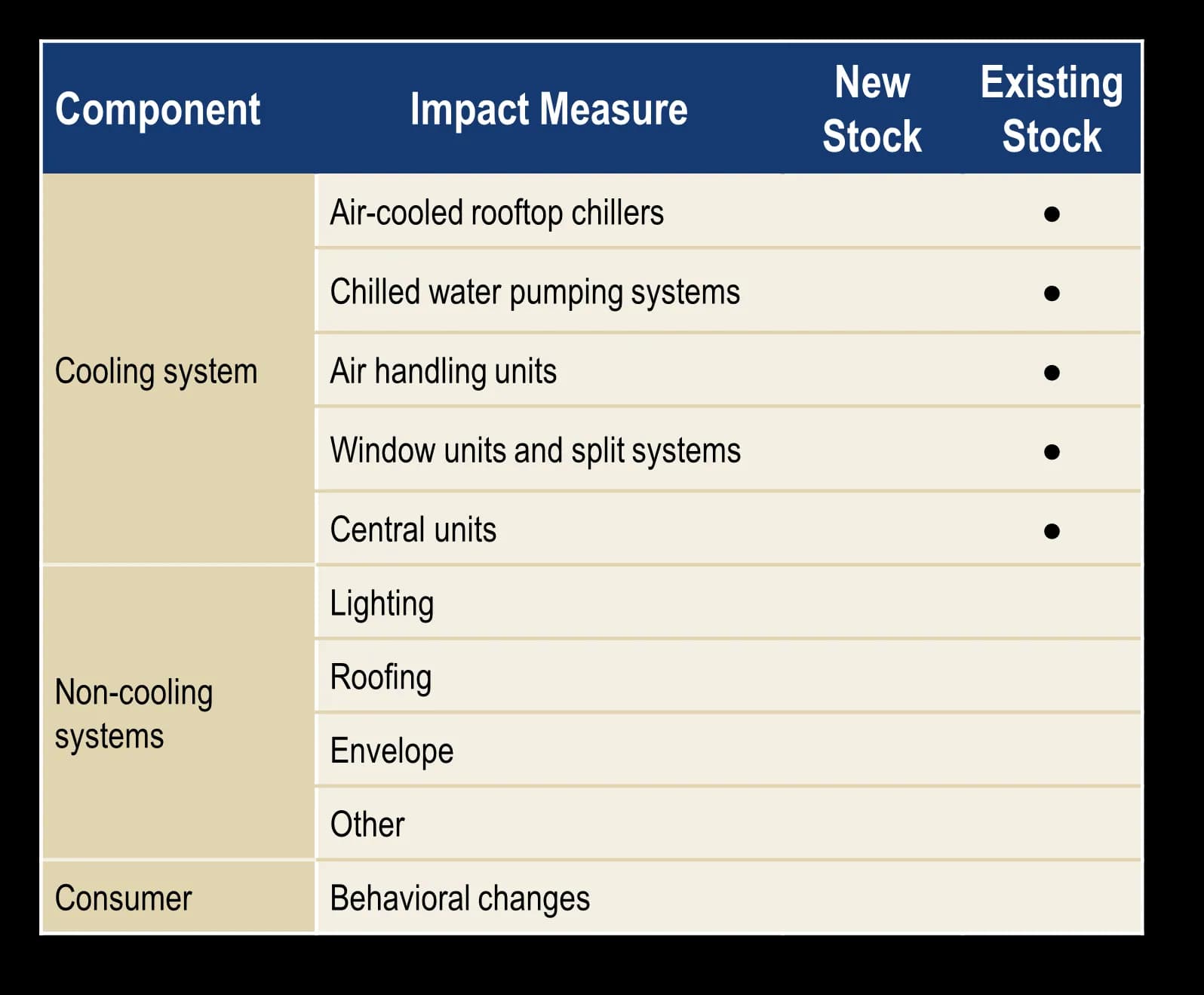
In a large district cooling retrofit across the Middle East, a range of interventions were implemented to reduce electricity consumption and operational stress during peak summer loads. These included both cooling and non-cooling strategies—ranging from HVAC tuning and envelope optimization to behavioural shifts in operation schedules. The table below outlines these measures. Nothing about cooling interventions is flashy or headline-worthy—there's no 'shiny button' fix. Most of the gains are slow, data-driven, and require patience. If someone is rushing you toward an expensive equipment purchase without walking you through passive or maintenance-based alternatives, be cautious—it’s likely a sales pitch, not a solution.
Cooling Technology | Non-cooling technology |
Balancing and recommissioning of cooling system | Maintenance of building façade |
Isolation and decommissioning of excess cooling capacity | Sealing and insulating building openings |
Monitoring, control, and analysis of cooling system operation | Installation of reflective materials in building façade |
Maintenance of cooling system | Modifying roof surface to increase reflectivity and/or insulation |
Maintenance of air distribution system | Replacing glazing with higher efficiency materials |
Replacement of cooling system | Modifying wall surface to increase reflectivity and/or insulation |
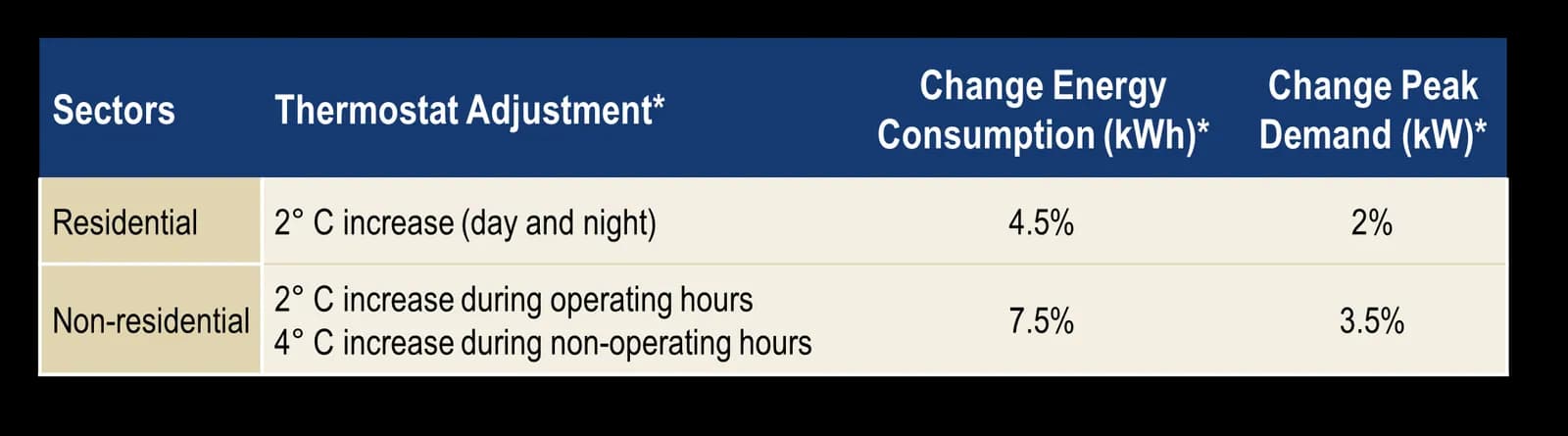
Increasing thermostat set point : Energy savings from increased thermostat settings have the potential to reduce energy consumption and peak demand. Building simulation models were run for the thermostat adjustments shown in the table below. Reduction in energy consumption ranged from 4.5% to 7.5%. Reductions in peak demand ranged from 2% to 3.5%. Recognizing that, for some buildings, any increase in thermostat setting could result in excessive humidity and related problems, it was assumed that only 75% of buildings across all typologies could implement this measure. | Installation of resistive insulation |
Implementing energy efficiency codes and standards | Implementing energy efficiency codes and standards |
❄️ Cooling specialists who will avoid expensive equipment purchase
✉️ Contact [email protected]
🧰 List of interventions is mostly maintenance — equipment purchase is the last resort
Once a building is constructed, its energy efficiency has been largely cast for the lifetime of the building
The technical potential from cooling improvements from new construction codes and standards will surpass the savings from cooling improvements in existing buildings
However, there is no guarantee that there will be full (100%) compliance with the codes and standards for new buildings without an effective program of enforcement.
Thus, near team action items in the cooling include not only cooling system enhancements for the existing stock of buildings, but also the growth of inspection and enforcement capabilities within appropriate government organizations in the organization.
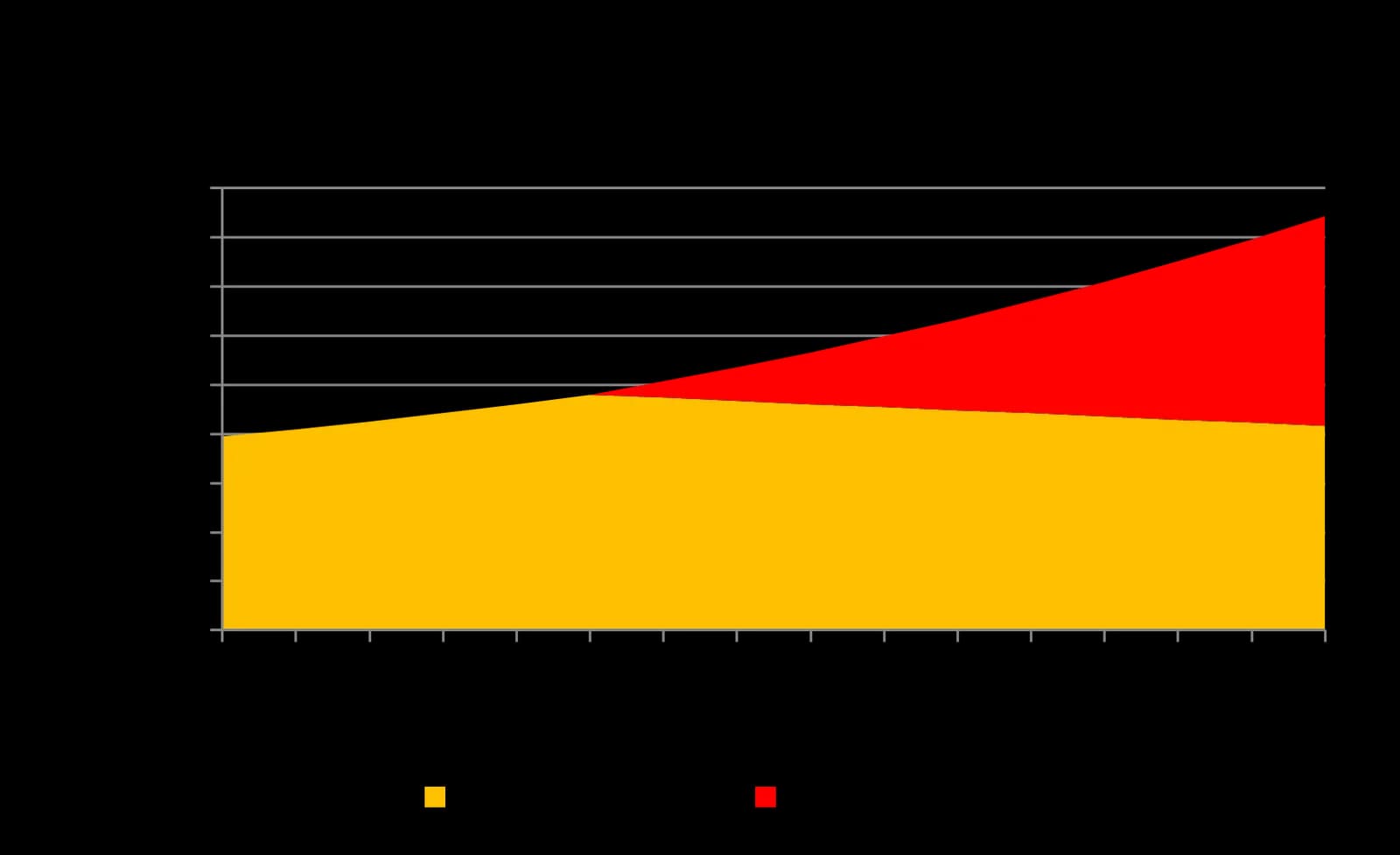
This graph shows that existing buildings , ( see technical potential in orange ) , are the bulk which decide the electricity technical potential of buildings " electricity consumption"
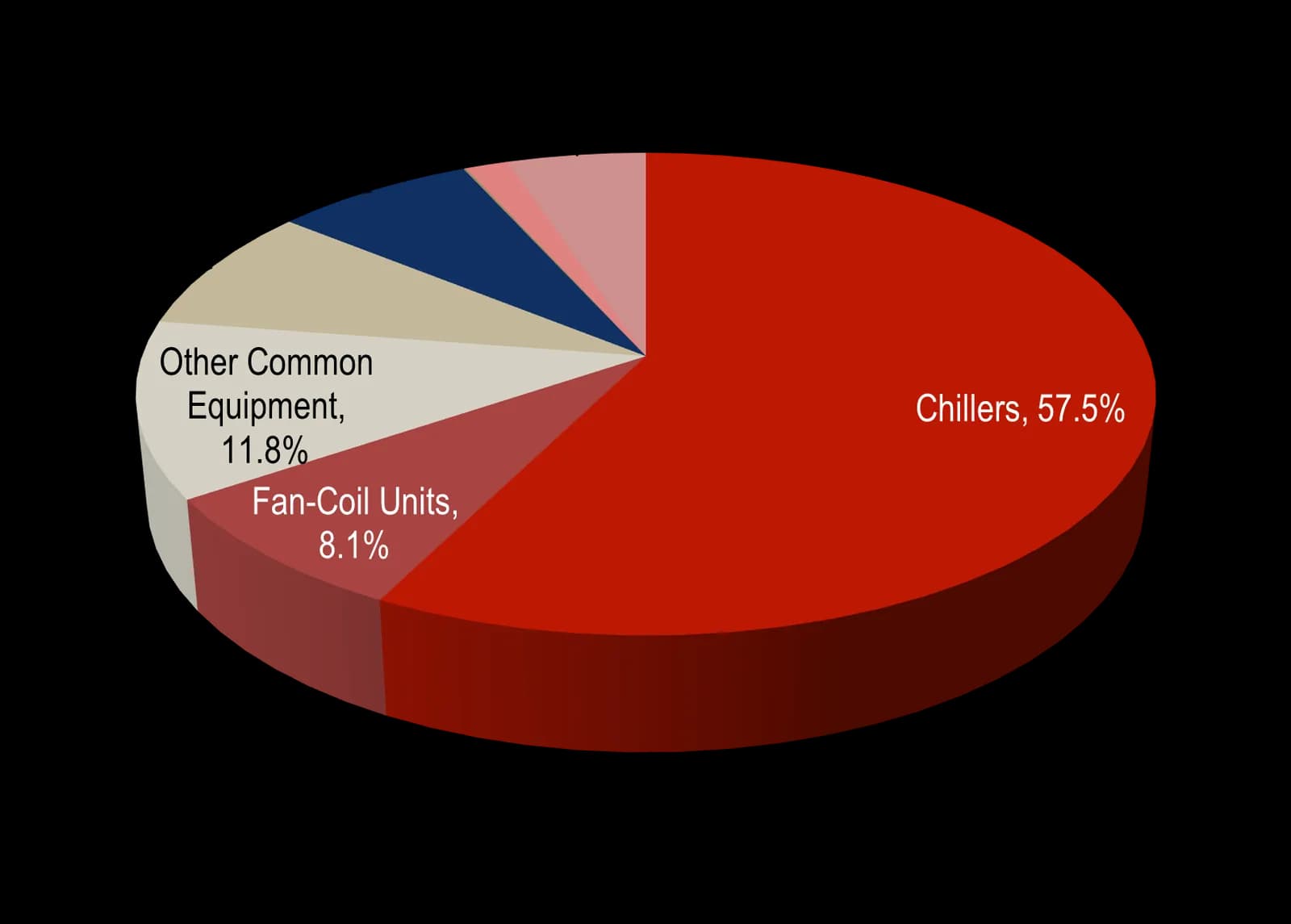
Improving the efficiency of air conditioning (A/C) systems is identified as the most promising opportunity for energy savings for cooling
The primary cooling technologies you can cove would be air-cooled chillers, split systems, and window units. Regarding cooled air distribution, this strategy would require checking and rebalancing variable air volume (VAV) boxes, if necessary, to ensure systems are working properly.
Over 60% of total electricity and an even greater share of peak electricity consumed in the residential, commercial, and institutional sectors goes to air conditioning.
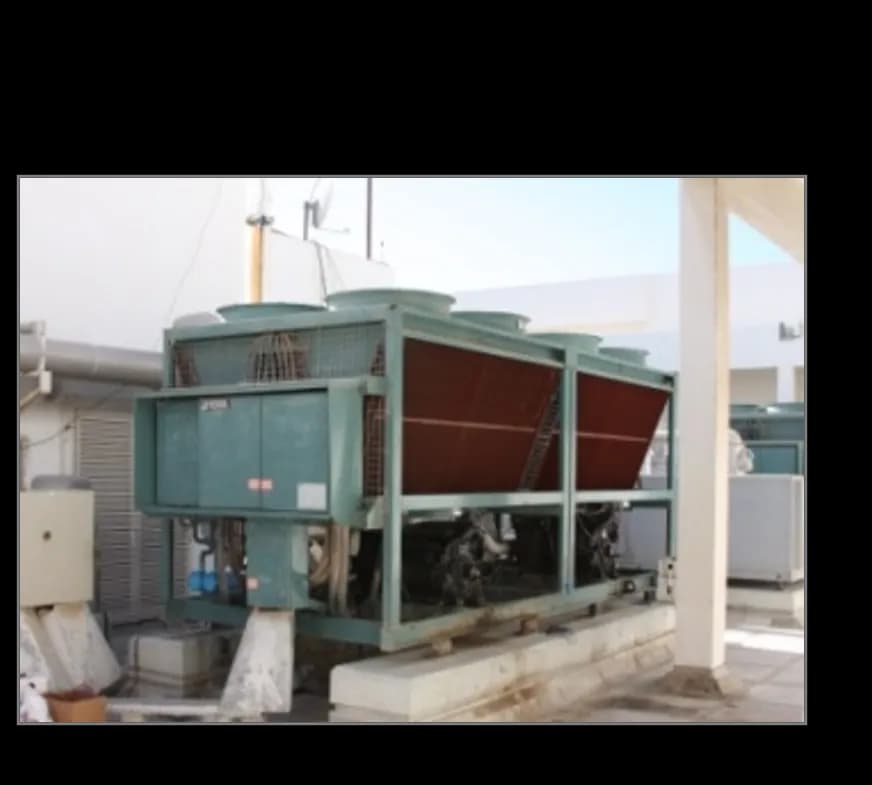
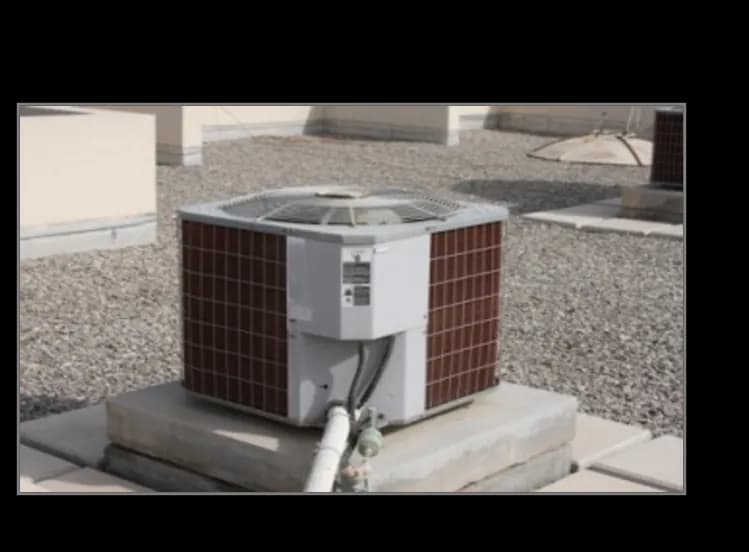
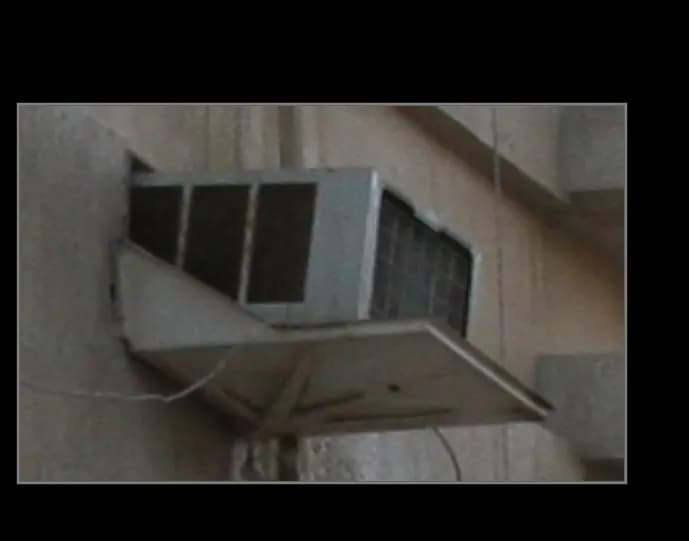
As shown in the figure below A/C drives building peak electricity demand.
-
A/C energy consumption in India has a similar system-wide peak profile—it drives consumption at the highest marginal cost of generation.
-
Reducing A/C consumption and demand is perhaps the best near-term opportunity globally and India
-
Improving A/C efficiency will yield significant fuel savings and offset costly peak fuel sources such as peak tariff , diesel and liquid natural gas (LNG) in case ot outage
For these reasons commercial solutions for cooling is selected as the focus areas of near term by Path to Green Homes
**Pilots we can support you with from our experienced consultants
**
Air Tightness | Infiltration rates and heat transfer losses are expected to be large, thereby resulting in increased cooling demands and oversizing of cooling plant. A pilot project testing the air tightness of buildings at various ages and conditions would provide more precise information of the base case conditions. |
Façade Upgrade & AC Replacement | Many of Indias buildings are very old. It is evident that very little or no maintenance is undertaken on them. The building envelope elements (walls, glazing, roof) are in poor condition. Each residential unit uses a very inefficient wall/window-mounted AC unit. A pilot project implementing façade upgrading works and replacement of AC units on a few buildings would document the technical and achievable potential savings. This work would include split and window unit replacement. |
Envelope Upgrade | Document baseline performance of existing villas and assess any technical issues. Perform pressure tests on a sample of villas in each typology. |
Standard Practice for Periodic Façade Inspections | Research and develop guidelines for conducting periodic façade inspections. |
Based on the pilot projects, a comprehensive handover is expected that empowers building management companies to take charge of proactive maintenance of central air-conditioning systems, including A/C chiller controls, HVAC product certification, and ensuring compliance with relevant building codes and standards. This effort is part of a broader demand-side energy management program targeting existing buildings, with the goal of significantly reducing cooling energy consumption across commercial, residential-commercial, and institutional properties. The strategy includes implementing one-time improvements to the building envelope—such as better insulation or high-performance glazing—that enhance energy efficiency with minimal ongoing operational costs. Key technical tools like commissioning, decommissioning, monitoring, and preventive maintenance will ensure cooling systems consistently perform at optimal levels. A major differentiator of this approach lies in its passive solutions: while they may require initial capital expenditure, they provide long-term savings without recurring investment. Additionally, the strategy supports regulatory adoption by developing enforceable codes and standards, running public education campaigns, and establishing effective enforcement mechanisms. Complementing this is a tariff-based approach that introduces a revised pricing structure, educates consumers on managing consumption under the new tariffs, and integrates advanced monitoring and analytics to help track and optimize energy use. Together, these measures create a robust, multi-pronged framework for sustainable cooling in India’s built environment.
Renewable energy sourcing matching cooling hours
Heat gain refers to those influences on a building that create cooling requirements (the need to reject heat). These include influences from outside the building (ambient air temperature) as well as those inside the building (number of occupants and heat produced from lighting). The ambient air temperature directly affects the temperature of outside air used for fresh air intake, as well as the amount of heat introduced to the building through windows, outside walls, and roofs (collectively, the building envelope). The higher the insulating value of the building envelope, the less heat is introduced into the building from the outside.
Power Consumption for Cooling
The power required to produce a unit of cooling is affected by three factors: (1) the efficiency of the equipment as installed, (2) the maintenance condition of the cooling equipment, and (3) the overall state of the cooling system (as determined by commissioning). The greater the conversion efficiency of the cooling equipment, the less energy is required to produce a unit of cooling. Commissioning of equipment, upon installation, ensures that all systems are set up to operate at the as-designed efficiency. Once a cooling system begins to operate, its efficiency begins to degrade as a result of equipment wear, fluid loss, and impact of ambient conditions (e.g., dust and corrosion). Maintenance of the cooling components can restore them to the original design performance conditions. The longer a cooling system operates after commissioning or maintenance, the more power is required to produce a unit of cooling.
The technical potential from cooling improvements from new construction codes and standards will surpass the savings from cooling improvements in existing buildings.
However, there is no guarantee that there will be full (100%) compliance with the codes and standards for new buildings without an effective program of enforcement. Ensuring that new construction buildings codes are enforced is a primary objective of the Comprehensive Cooling Plan of any building in India.
Partial compliance with the codes and standards represents a lost opportunity: once a building is constructed, its energy efficiency has been largely cast for the lifetime of the building. Thus, near team action items in the CCP include not only cooling system enhancements for the existing stock of buildings, but also the growth of inspection and enforcement capabilities.
Cooling Requirement
The amount of cooling required to condition an interior space is a factor of the heat gain of the space and the thermostat temperature set-point. The lower the thermostat set-point, the more cooling is required to offset a given quantity of heat gain. A 2-degree C increase in thermostat set-point can result in a reduction of 3.5% to 5.5% in annual energy usage.