
Find an installer
Compare quotes from verified solar installers near you
Enter your PIN code & get matched on the next page.
Installers manually verified by a human
⚡ Types of inverters: Grid, Hybrid and AC Coupled
Grid tied inverter
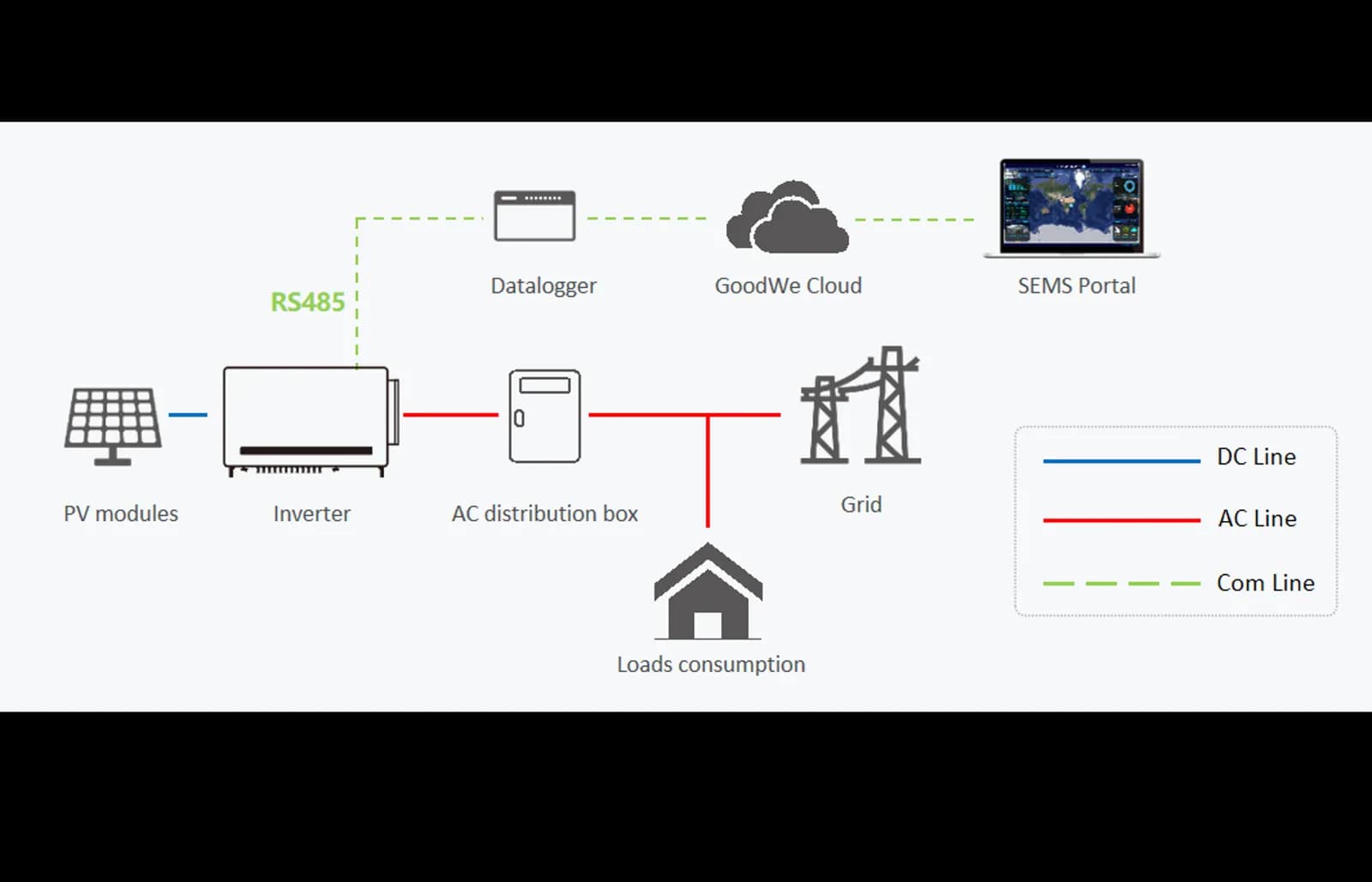
No energy storage.
Self-consumption rate about 30-40%.
Couldn’t work when power failure.
Below are the TWO battery solutions.
A battery has advantage of energy storage and to raise self-consumption rate of renewable energy in the household. In addition the battery helps meet different market demand such as TOU, self-consumption, unstable grid, nature disaster.
A common misunderstanding in India is that solar with continue to work , during daytime , even during power outage.
Hybrid inverter
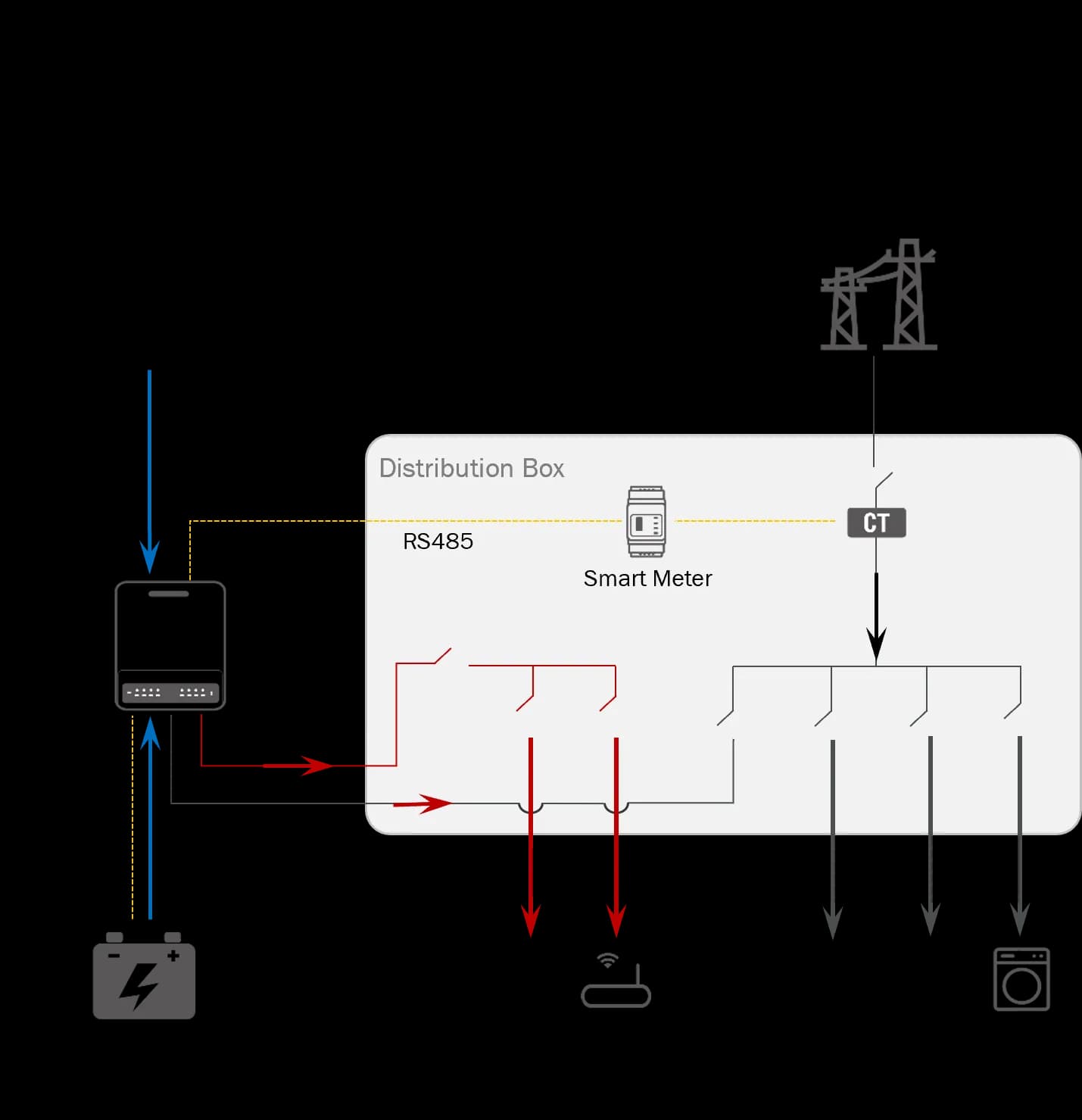
Energy stored in battery .
Self-consumption rate about 70-80%.
Could work when power failure.
Capacity extension / AC Coupled
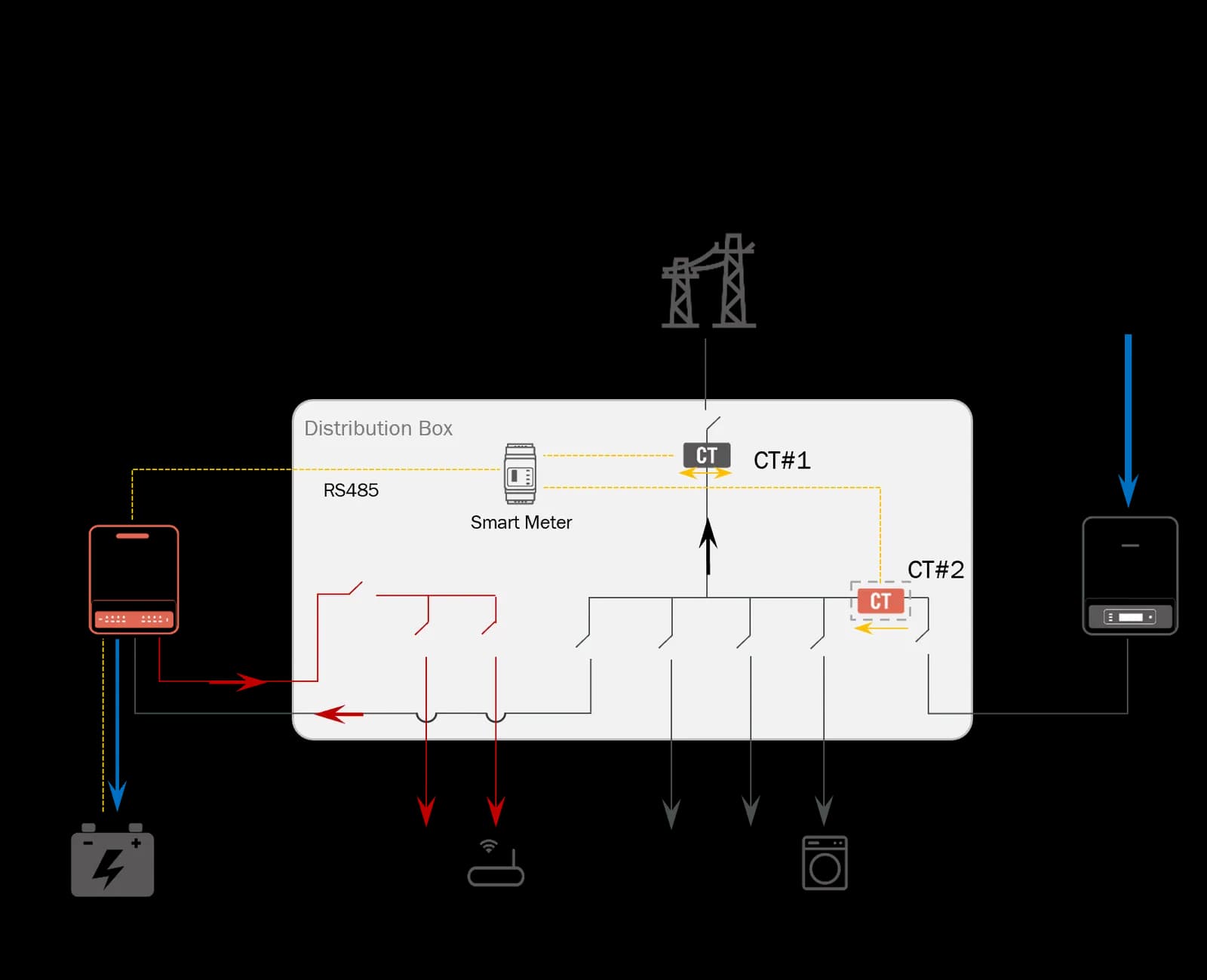
Retrofit solution.
More capacity.
More energy storage.
Capacity-extension solution
📊 Understanding Specifications of Solar Inverters (Grid and Hybrid)
| Choose Brand or Manufacturer name |
| Inverter Series are group of related products |
| Part number is same as model followed by the inverter AC power and phase (1Φ / 3Φ) for ease of selection . e.g what Golf/polo is to VW |
| Datasheet Values |
| AC output power e.g. 5KW inverter for 5KW household load |
| Grid type connect only with solar panels. Hybrid connects with both panel & battery. Storage Tower connect only with battery |
A 5KW inverter should work >5KW for a small “time period (secs)” to accommodate surge loads like aircons, motor, pump etc.
|
A 5KW inverter should work >5KW for a small “time period (secs)” to accommodate surge loads like aircons, motor, pump etc. If Overload (secs) is ZERO (0), it means that Backup overload load is not possible.
|
| A household can be Single or Three phase. Most Three phase inverters already feature unbalanced load and they can deliver 5KW across 3 phases as follows 0.5KW, 1KW, 3.5KW |
| Solar Panel compatibility |
| High efficiency panels have high input current. The inverter must be capable of handling it, or it will lead to major incompatibility & clipping losses |
| The greater the number of strings, more flexible the arrangement can be via no of MPPTs. It will also provide conditions for matching different power of different strings. (e.g. different directions of panels, shadow conditions etc) |
| Monitoring data can be MPPT level or solar string level, the latter is more rich in data & for troubleshooting |
| Country of Origin is HQ for mfr. irrespective of place of assembly |
| Efficiency is to how best inverter converts DC power to AC household power. More losses can happen as the temperature rises over 40º C |
| Inverter colour is personal choice. However the quality of paint, C5 corrosion level are imp for longevity. In future plastic housing of inverters (to save cost) will make an arrival which need compliance to mechanical, electrical and tough EMI compliance |
Basic Safety features you can assume almost all mfr in battery inverters will havePre-charge Protection Overcurrent Protection Short-circuit Protection High/Low Temperature Protection Overvoltage / Under-voltage Protection Component Fault Protection |
| Type 1 = best , Type 2 = Good , Type 3 = standard. Very few inverters have an SPD fail alarm (LCD screen blinks) when it gets damaged due to surge. |
| Type 1 = best, Type 2 = Good, Type 3 = standard . Very few inverters have an SPD fail alarm ( LCD screen blinks) when it gets damaged due to surge. |
| “Damaged SPD” can be part of an expensive board & both need to replacement. We preferred only SPD replacement if possible. |
| Standard features like “Reverse protection” and “breaker” are basic safety but Battery Fuse, Soft Start is the real safety thing |
Compact is better. Liquid cooled models won’t be compact but very advanced technology. e.g. Tesla has liquid technology while most brands in the market have fan based forced cooling |
| Sometimes light inverter is better but not always . Some mfr leave a must “EMC filter” to make it lighter. Some top models add “liquid cooling” to add to reliability. |
| Battery Values |
| Each time battery is discharged that’s one battery cycle. There are 365 days in a year and 10 years means 3650 cycles (100% charge and discharge each day). Please ask supplier if can battery be fully discharged Or weather maximum 90% / 80% of discharge is recommended since it has price implication |
| High Battery voltage reduces losses. In addition, storage capacity maybe increased by adding more batteries in Series. However not all brands allow battery capacity addition, by mixing an Existing (Old battery) with a new one. |
| Expandable energy storage solutions to meet customer demand in the future. Storage capacity may later be increased, by adding batteries in PARALLEL. “No of units in parallel” is an inverter feature to parallel batteries, without purchasing an additional data logger. |
| We can connect 7kW solar panels to a lower rated 5Kw inverter. This is particularly advantageous in certain parts of Europe (such as Belgium) |
| Warranty |
| Grid inverters : A 10-12 year warranty is at least recommended Hybrid / AC Coupled inverters : 5 years (product warranty) 10 years (performance warranty) |
| 3rd Party Device Compatibility |
“Plug & play” interoperability for 100s of smart devices for your home conected to home inverter
|
Integrate 3rd party reliable weather data from MetroControl / Skytron/ SolarLog useful for PV Energy prediction. |
Heat pumps operate directly from solar which is the cheapest energy source |
Communication between devices through the local area network will reduce the complexity of system wiring. Wireless connection is more beautiful, but the complexity of the initial configuration increases |
| Futuristic Requirements |
In General EV Charger can integrate in any PV grid. However this requirement is “Yes” when an Electric vehicle can be charged quickly, in a PV-optimized or forecast-based manner. The solar power should fully feed the car and not the grid. |
Mainly required right now in the USA. It’s the ability to participate as an Interoperable PV Inverter with advanced Grid-Support Functions as Distributed Energy Resource ( DER). |