
Find an installer
Compare quotes from verified solar installers near you
Enter your PIN code & get matched on the next page.
Installers manually verified by a human
Modern power backup
A modern power backup inverter has two power outputs , one for backup loads ( see below) and one power backup for on grid loads ( aircon , washing machine and heaters)
✅ Energy stored in battery
✅ Self-consumption rate about 70-80%. Defined as % time your home can work on Solar + home Battery
✅ Could work when power failure.
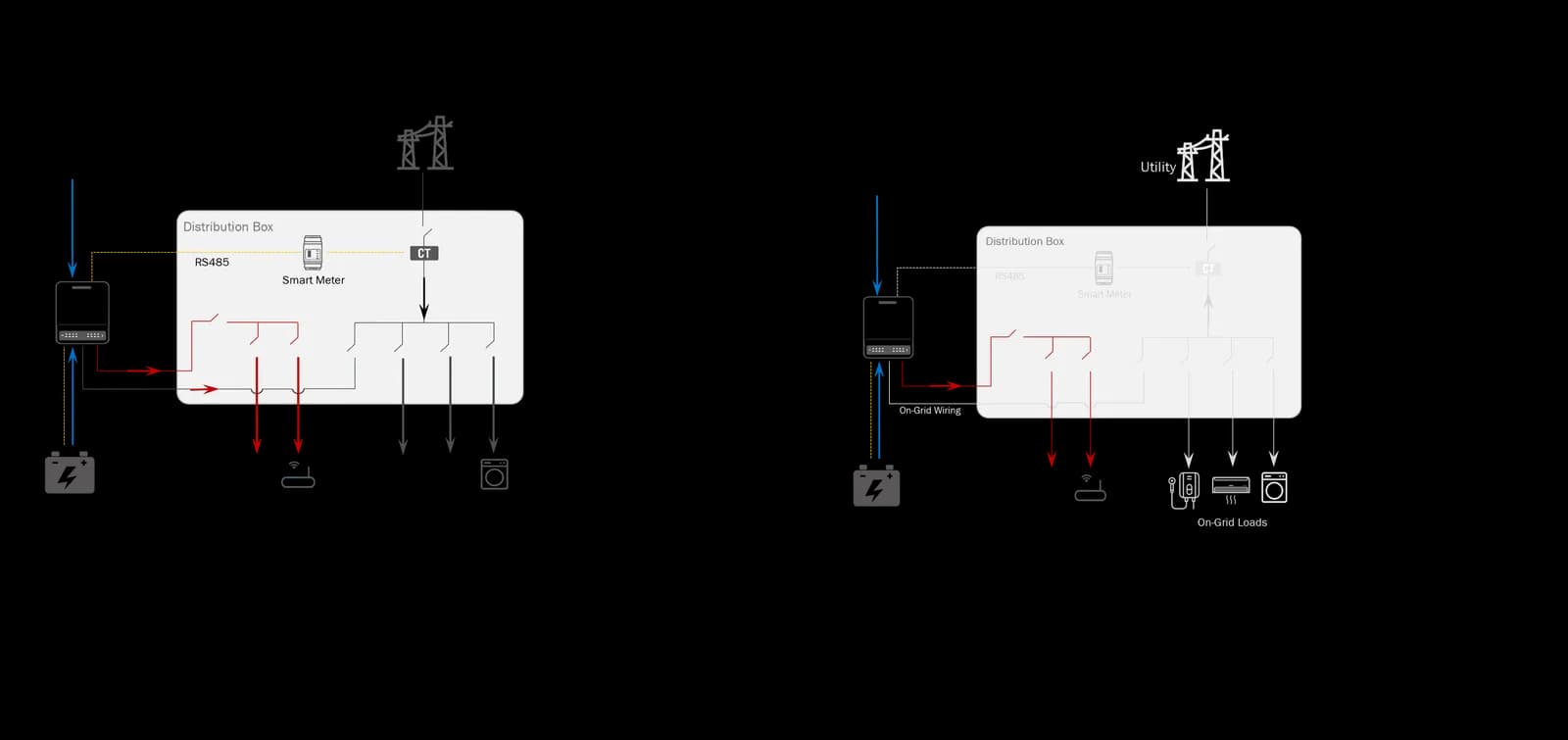
Working Logic is PV Supply priority loads → battery →export . It means solar power will prefer the household loads then charge the batery
Load Consumption Priority PV → battery → utility. It means that loads will 1st get serviced by solar energy if available.
Stackable: Add batteries
For battery purchase you will need to focus first on capacity of battery which varies from 4-6kwhr per battery pack. e.g. the table below has a 5.4kwhr battery.
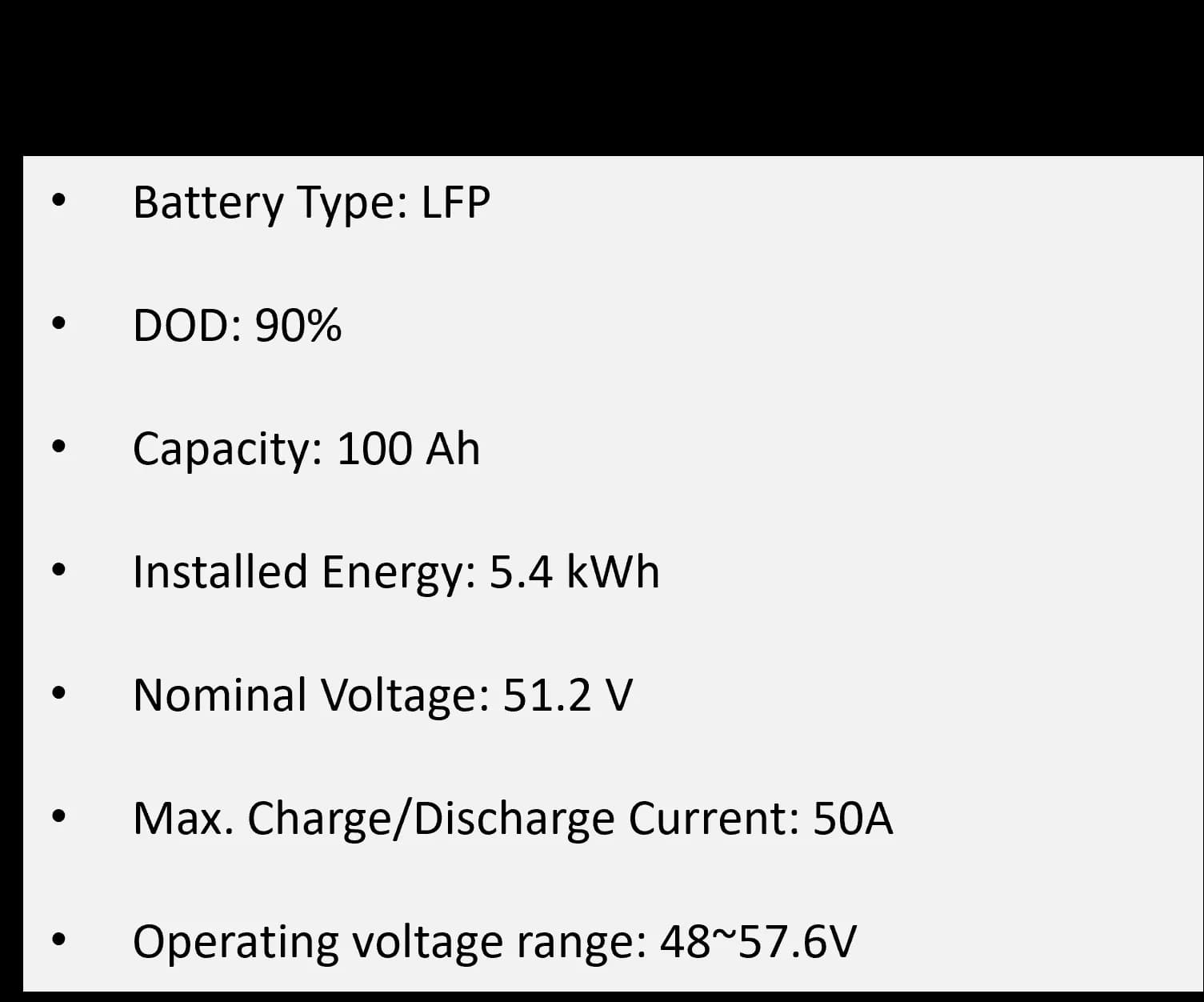
As the household load increases you will want to increase the battery capacity ( while keeping inverter power as same) . With addition of EVs you may need to add more home based storage. In case of low voltage batteries ( 48V) , it maybe possible to add later more battery modules by paralleling of battery. But the inverter , you choose today , must be capable of adding more batteries in parallel in the future without purchasing a 3rd party paralleling device. Such paralleling feature is supported only by a very few models.
Multi-module Battery system | ||
Battery modules connecting | 1-N | N Parallel (2≤N≤6) |
Capacity (Ah) | 100 | 100*N |
Usable Energy (kWh) | 4.8 | 4.8*N |
Max. Charge/Discharge Current (A) | 50 | 100 |
Communication | CAN | |
Certification | CE, UN38.3, IEC 62619(Cell) | |
System Protection Strategy | Pre-charge Protection Overcurrent Protection Short-circuit Protection Component Fault Protection High/Low Temperature ProtectionOvervoltage/Under-voltage Protection | |
A high voltage inverter system is preferred due to ease of future battery capacity additions.
The best forward looking battery will have...
Stackable Design
power extendable
Slim Body
save space
Higher Available Power
20% higher than rated energy
Separate Control
easy maintenance
We have the low voltage battery on the left side below & the high voltage battery on the right side ( we recommend high votage battery due to lower losses)
High and Low Voltage battery, A long term Choice
Hybrid storage inverters come in both low voltage (LV) like 48V and high voltage (HV) systems of 200V-400V+ depending on battery configuration.
A *low voltage (48V)*system is suitable when the backup needs to be 1-2 hours (<5kWhr battery capacity). Beyond 5kWhr battery , the advantage of a high voltage battery systemis lower power loss , higher efficiency and relative ease of adding more battery modules in future. The technology of High Voltage battery is more advanced with specialty polymers , special design to avoid creep distance and long life.
Compatible inverter
The first thing to note is that any random battery is not compatible with any random inverter. If you try this mismatch them the batery will catch fire. Seondly , battery has battery pack peak capacities as per example in the table below ( e.g. 5.5kwhr ). Lastly , the most important thing to consider is as your household load increase , you need to choose a battery brand in which battery can be added ( series/parallel) to increase the system capacity. As an example when we add 6 parallel or series 5.4kwhr battery them we get roughtly 30kwhr total capacity
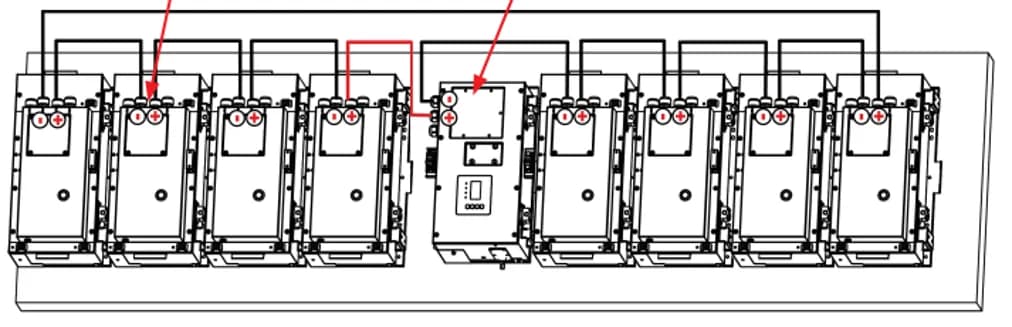
① Different hybrid inverter connect to different types of High Voltage /Low Voltage battery
② Before installation, make sure battery is not damaged and battery breaker is switched OFF. And whole energy storage system is isolated from both AC and DC power.
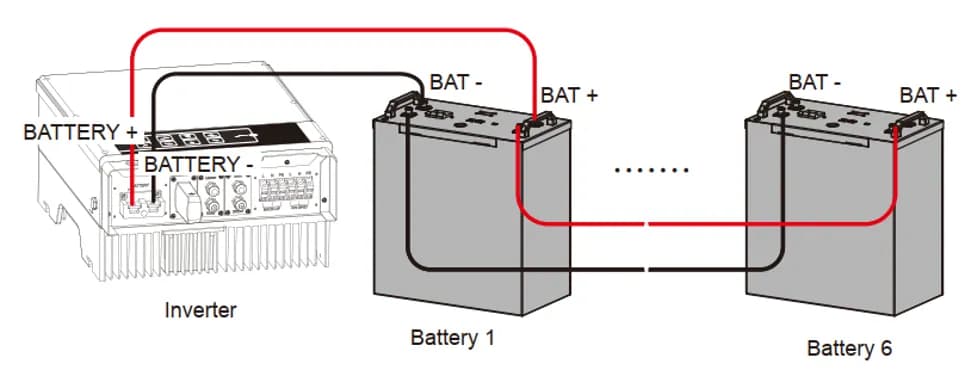
③ Battery packs shall be connected in different ways for High Voltage /Low Voltage battery
④ Please make sure the positive and negative pole on both battery and inverter side not reversed, otherwise the inverter or battery could be damaged.
⑤ Read our user manual or call our hotline before any installation and O&M.
Battery Model | Pack Capacity | System Capacity | Compatible Inverter |
A | 5.4kWh | 1~2 Parallel | SMA |
1~6 Parallel | Solis | ||
B | 2.56kWh | 5~8 in Serial | Solar Edge |
C | 2.56kWh | 3~8 in Serial | GoodWe |
D | 5.4kWh | 1~6 Parallel | Huawei |
E | / | / | ET/BT/EH/BH |
F | / | / | BTC/ETC |
Maintainance
Unaddressed Safety issue
There have been many high profile fires in residential home based battery system in Europe even in famous brands. Regardless of the Root cause , In Hybrid inverters its highly recommended to have fuse at battery terminals (not just slow acting MCB) for higher safety. As per PathtoGreenHomes NOT many hybrid manufacturers are providing in built fuse so we suggest use an internal / external fuse. You may use PathtoGreenHomes website compare section to identify models which have in built fuse.
Integrated hybrid inverter and Battery
The battery can be supplied along with the hybrid inverter, in a nice integrated tower (ask IP55 rated indoor unit). Alternately, the home owner can purchase hybrid inverter and a 3rd party compatible Lithium Ion battery separately. Key word being compatible. If Battery is not compatible with inverter , it may lead to fire. The advantage of an integrated solution are higher especially when combined with a wireless solution to manage loads , as in our wireless blog.
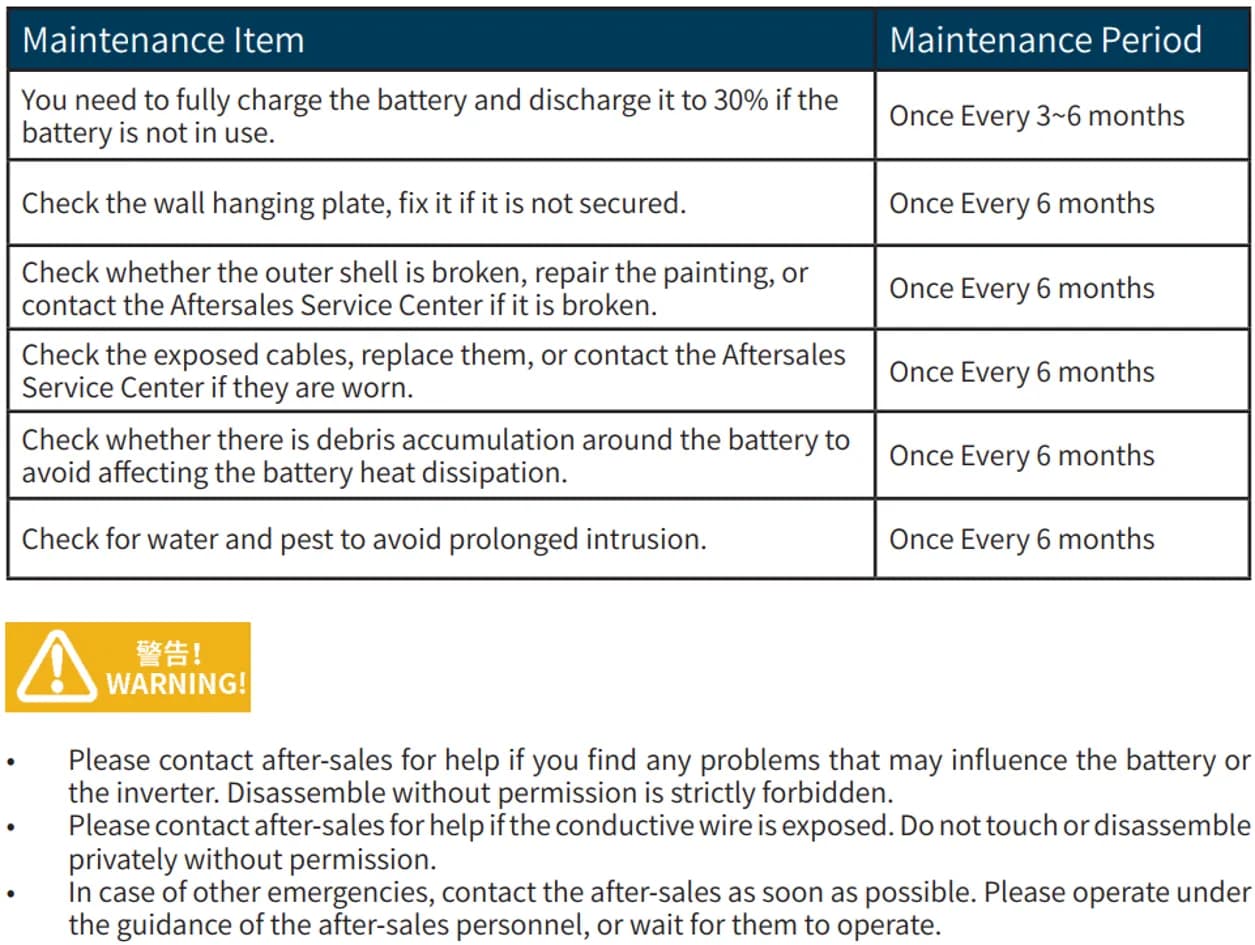
Maintainance
A battery which is kept in good service conditions is expected to last its warranty conditions.
✅ IP Protection: IP 20 (Indoor)
✅ Humidity: 15%~85%
✅ Operating Temperature Range: -10℃~50℃
✅ Installation: Ground Mounted, Stackable
Below is good maintainance practice out of which I strongly suggest to keep the battery charge between 50% -80% for maximum life